In this week’s chapter, our authors Madeline McCoy, Susan Braedley, and Renate Ysseldyk explore what barriers older adults experience when using urban public transportation and what it actually takes to make transit systems more age equitable.
Drawing on ethnographic research conducted in Ottawa with older adults, bus operators, and transportation managers, the chapter looks beyond transportation as simply a way to get from one place to another. Instead, the authors show how access to public transit is deeply connected to independence, social inclusion, healthcare access, and overall quality of life.
They begin with an important question: who is most affected when transportation systems are not designed with aging populations in mind?
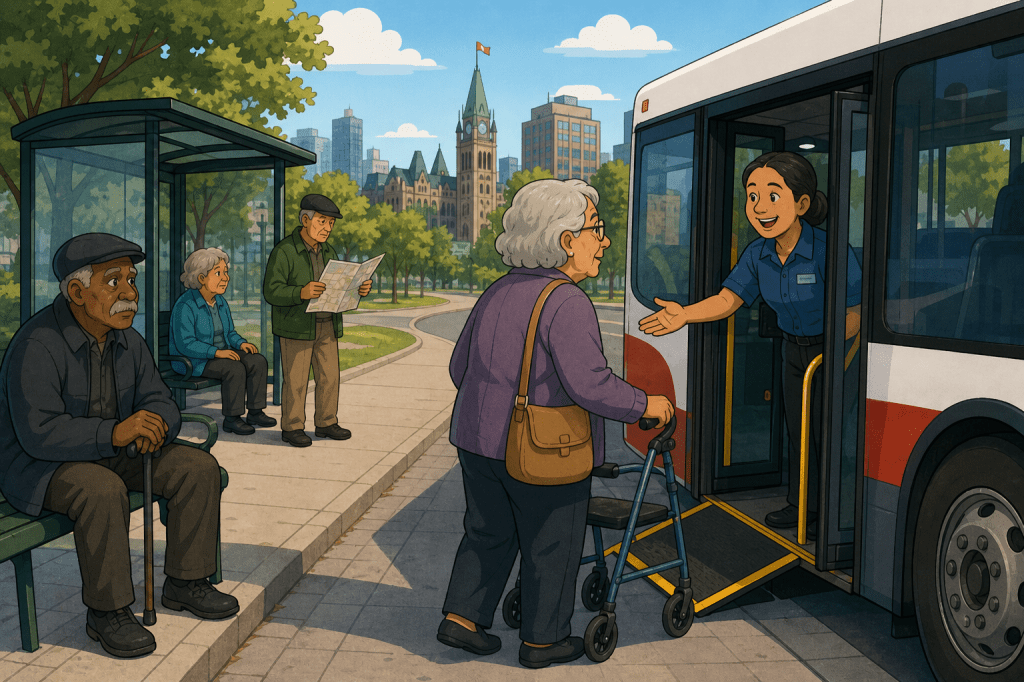
What stands out throughout the chapter is the emphasis on social barriers, not just physical ones. While accessibility features matter, the authors point to challenges such as rushed boarding times, unclear communication, lack of flexibility, and feelings of invisibility or exclusion that many older adults experience while navigating public transit systems.
The chapter also highlights that these barriers are not experienced equally. Older adults living with mobility limitations, low income, social isolation, or other intersecting challenges are often the most affected, showing how transportation inequities can deepen broader social inequities.
Ultimately, this chapter reminds us that age-friendly communities cannot exist without accessible and inclusive transportation systems. If we want older adults to remain connected, engaged, and independent, public transit has to be designed with their realities and experiences at the centre.
To read more, you can find the full chapter on the Bristol University Press Digital platform.


Leave a Reply